
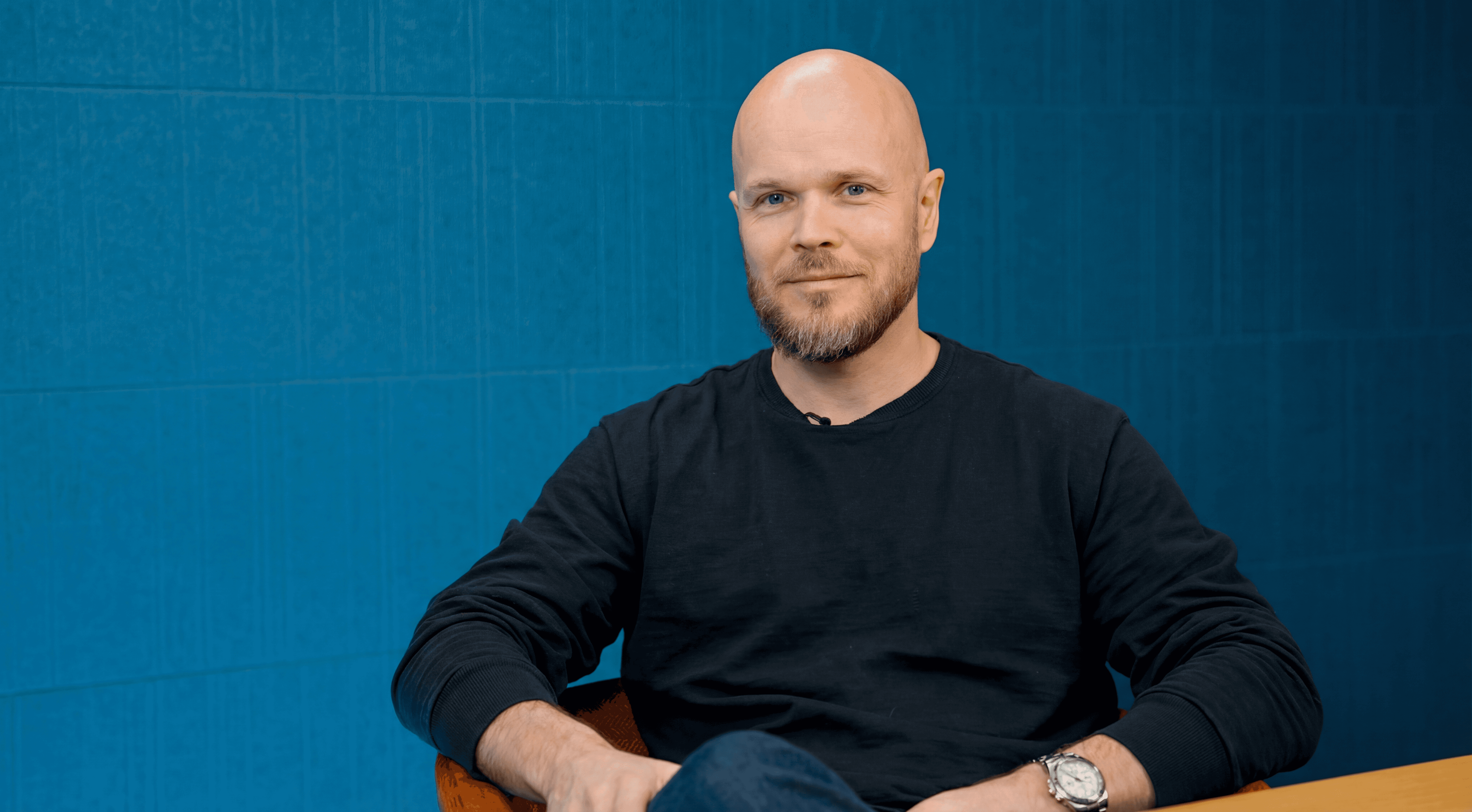
In this conversation, Jorn shares the path from a small Amsterdam studio to Facebook, the hard pivot that reshaped Framer, and the core reason he believes designers should become founders. See How Designer Fund moves fast without losing design quality.
From dutch graphic design to product craft
Jorn’s background is in traditional graphic design. He studied at design school and later attended art academy—part of a strong Dutch tradition of typography and systems thinking. He credits some of that culture to a period when government institutions invested heavily in forward-thinking design systems.
The real spark, though, was the Macintosh era. Icons, interface aesthetics, and carefully crafted software made him curious about how those products were built. That curiosity led him beyond visuals and into building software itself.
Sofa: building mac products before startups were normal
After graduating, Jorn looked for people interested in the intersection of software and interface design. At the time, there was little startup culture around him and venture funding wasn’t part of the equation.
He joined Sofa, a small Amsterdam studio founded by his future co-founder. As the first employee, he helped build products the team wanted to exist:
Checkout, a point-of-sale system
Versions, a Subversion client
Kaleidoscope, a file comparison tool
Those products demonstrated exceptional craft and attracted agency clients who wanted the same quality in their own software.
Apple design awards and an unexpected email
Sofa won an Apple Design Award for Checkout, then another the following year for Versions. That visibility led to an email from Mark Zuckerberg inviting the team to Palo Alto to discuss a “future partnership.”
When they arrived, it became clear the discussion was about an acquisition.
At the time, Facebook was scaling engineering rapidly but had far fewer designers relative to engineers. Bringing in high-quality product design teams was part of strengthening that balance.
Facebook as a learning mission
Moving from a 15-person studio to Facebook’s scale was a culture shock. But it was also intentional. Jorn and his co-founder saw it as an opportunity to learn how Silicon Valley companies build and scale products at massive scale.
They stayed for over two years, absorbing lessons about growth, product development, and company building before leaving to start something of their own.
Framer did not start as a website platform
After leaving Facebook, the team experimented for nearly a year:
a bitcoin wallet concept
a fashion app that let users try outfits on themselves
and eventually, a prototyping tool
The prototyping idea became Framer Studio, which was quickly adopted by product designers at companies like Dropbox, Twitter, Microsoft, and Amazon.
The product worked. Revenue grew. But it eventually plateaued around $4–5M ARR.
The plateau and the hard realization
The team believed prototyping would become central enough to replace static mockups across the industry. In reality, many teams still treated prototyping as optional.
For about a year, they tried education and evangelism, hoping adoption would accelerate. It didn’t.
At that point, they faced three options: sell, quit, or pivot. They chose to pivot.
The pivot insight: people hate rebuilding
Instead of focusing on their existing technology, the team interviewed hundreds of users and searched for a larger problem. The recurring theme was simple: rebuilding is inefficient. Designs get created, then rebuilt by engineers to ship. Work gets duplicated. The solution they pursued was focused and pragmatic: websites. If designers could visually build a website and publish it directly—without rebuilding—that friction would disappear. The new Framer offered exactly that: design on a canvas, click publish, and ship a live, performant site. The feedback loop was immediate and compelling.
Growth after the reset
Acknowledging the need to pivot took about a year. Executing the pivot took roughly 9–10 months. Framer launched the new product in May and reached $1M ARR by December of the same year. From there, the team expanded into supporting larger teams and companies, including adding a CMS for more complex websites.
Why designers should become founders
Jorn’s advice to designers is direct: do it. Design is fundamentally about problem solving. Founding a company is a series of problem-solving challenges across product, hiring, fundraising, strategy, and operations.
However, he also notes that founders must move beyond pure aesthetics. Early in his career, he was primarily driven by visual ambition. Over time, he learned to focus first on solving the right problem.
Design can be a strong advantage in founding—but only if paired with a willingness to tackle every aspect of building a company.
A caution for design founders
A common trap is over-investing in polish before finding product-market fit. Jorn emphasizes the importance of talking to users consistently and grounding decisions in real feedback rather than assumptions. Taste and craft matter, but they cannot replace market validation.
AI, design, and differentiation
Jorn is optimistic about AI. The barrier to creating images, video, and interfaces has dropped dramatically. But he has not yet seen a universal leap in quality across professional design work.
As generative tools become more common, differentiation through brand, positioning, and thoughtful execution becomes even more important. The tools accelerate production, but they do not replace judgment.
Designers are already trained to think in systems, empathize with users, and shape experiences. According to Jorn, those skills translate naturally into founding—if paired with the willingness to learn the parts of company building that extend beyond the canvas.
55% of YCombinator’s most recent batch launched on Framer. Checkout all startups here.
